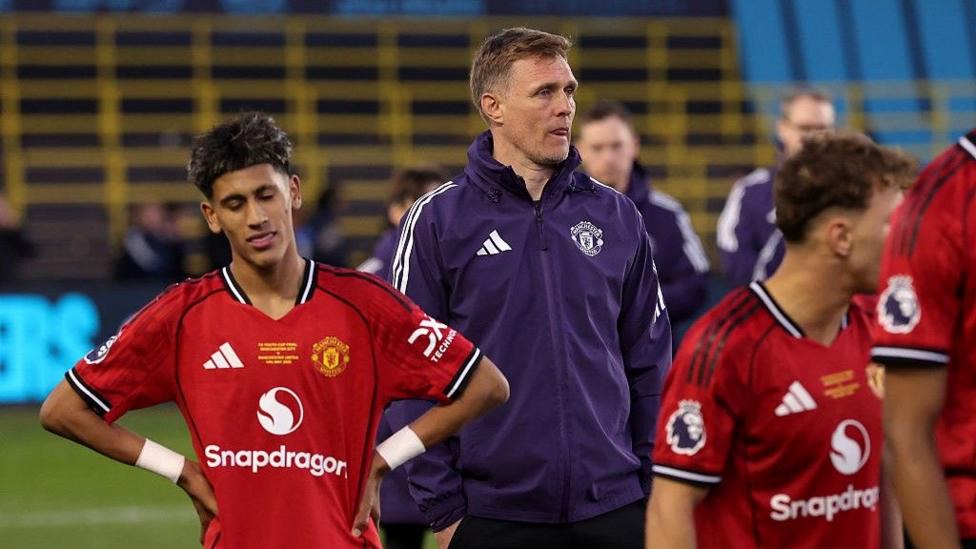
Manchester United coach Darren Fletcher has launched a scathing attack on the Football Association following a controversial 2-1 defeat to Manchester City.
The silver trophy sat on a podium at the Joie Stadium, but for Darren Fletcher, the atmosphere felt entirely alien for an FA Youth Cup final. As Manchester United’s Under-18s trudged off the pitch following a narrow 2-1 defeat to Manchester City, the frustration radiating from the United technical area had little to do with the scoreline and everything to do with the branding of the evening. For a competition steeped in history and supposed neutrality, Fletcher felt the governing body had effectively handed the keys to the host club, turning a national showpiece into a localized celebration for the blue half of Manchester. It was a bitter end to a campaign that promised much but delivered a harsh lesson in the politics of modern youth football schedules.
United’s youngsters had already suffered the agony of a Premier League Under-18 Cup final defeat to Crystal Palace, where a stoppage-time equalizer preceded a penalty shootout heartbreak. To follow that with a loss to their local rivals was wounding enough, but Fletcher’s post-match comments suggested a deeper institutional failure by the FA. The former Scotland captain, who has transitioned from a senior boardroom role back to the grass to guide the next generation, did not hold back. He voiced a sense of betrayal, suggesting that the very essence of the FA Youth Cup—a competition United have won a record eleven times—was being diluted by a lack of administrative backbone and a failure to protect its prestige.
The Venue Dispute and the Old Trafford Snub
The friction began long before the first whistle blew. United had reportedly offered to host the match at Old Trafford, a stadium synonymous with the Busby Babes and the Class of 92, providing a grand stage for the country's elite youngsters. However, City rejected the proposal. With construction work ongoing at the Etihad Stadium, the Blues insisted on playing at the Joie Stadium, their 7,000-capacity academy home. For Fletcher and the United hierarchy, this was a missed opportunity to elevate the match to the level it deserves. They felt the decision deprived players from both sides the experience of a genuine stadium atmosphere, settling instead for a training-ground environment that lacked the gravitas of a major final.
While City officials claimed the match was a sell-out, the visual evidence suggested otherwise. Significant portions of the home sections remained vacant, a stark contrast to the United end, which was packed to capacity with vocal supporters who had traveled across the city. The sight of empty seats at a prestigious final, especially after the rejection of a much larger venue, added fuel to Fletcher’s fire. It reinforced the feeling that the occasion was being treated as a domestic academy fixture rather than a national final. The presence of Pep Guardiola and Michael Carrick in the stands only highlighted the calibre of talent on display, making the choice of a secondary venue feel even more restrictive to the growth of the game.
Fletcher’s argument centers on the idea that the FA should have intervened to ensure the final was played in an appropriate setting. By allowing City to dictate the terms, he believes the FA surrendered their authority over their own competition. For United, the Joie Stadium felt like an away ground in every sense, lacking the neutral veneer that usually accompanies cup finals. This perceived lack of balance set the tone for an evening where the visitors felt like outsiders at an event where they should have been equal stakeholders, a grievance that Fletcher carried into his forceful discussions with officials after the trophy presentation.
A Ceremony of Discontent
The post-match presentation proved to be the breaking point for the United coach. As EFL chairman Rick Parry stood ready to hand over the winners' medals, the announcements over the public address system drew Fletcher’s ire. He described the manner in which City’s players and staff were introduced as over-the-top and unprecedented for an FA-run event. Fletcher insisted that shouting out individual coaches and every single player during the medal collection was a departure from the traditional decorum of cup finals. To his ears, it sounded less like an official FA ceremony and more like a club-specific celebration, further alienating the losing side.
Fletcher’s frustration reportedly boiled over into a heated confrontation with FA officials on the pitch. He was observed airing his views with significant force, demanding to know why the competition had been allowed to feel like a Manchester City tournament. His core complaint was that the FA had permitted the host club to take over the narrative and the logistics entirely. While he was quick to compliment City’s performance on the pitch—conceding that Oliver Reiss' side were the better team on the night—he remained steadfast that the respect shown to the opposition was undermined by the atmosphere created by the organizers. It was a rare public outburst from a man usually known for a more measured approach, highlighting the depth of his conviction.
The optics of the celebration are important in youth football, where the transition to professional standards is heavily emphasized. Fletcher’s concern is that by allowing one club to dominate the presentation style, the FA is eroding the sense of occasion that makes the Youth Cup special. If the final feels like a routine home game for one side, the psychological weight of the achievement and the pressure of the moment are altered. For Fletcher, the FA’s role is to act as the custodian of these standards, and in this instance, he believes they fell spectacularly short of the mark, allowing the event to be swallowed by the host club’s own internal culture.
The Congestion Crisis and the PL2 Double-Header
Beyond the ceremony and the stadium, Fletcher highlighted a more systemic issue regarding the scheduling of youth fixtures. United are currently navigating a logistical nightmare, with the Premier League 2 play-off final at Brighton scheduled just 48 hours after the Youth Cup final. This rapid turnaround has created a conflict for players who are regular fixtures in both the Under-18 and Under-21 squads. With the PL2 game taking place on a Saturday evening as part of a double-header with a Women’s Super League match, the physical demands on the young players are reaching a breaking point.
This scheduling oversight has practical consequences for United’s development path. It essentially forces the coaching staff to pick and choose which developmental experiences their players can participate in. Some of the standout performers from the Youth Cup final will likely be forced to sit out the chance to win the PL2 title at the Amex Stadium due to the proximity of the games. Fletcher pointed out that this also impacts the first team, as any young players earmarked for potential inclusion in Erik ten Hag’s squad for the Sunday game against Nottingham Forest are effectively ruled out of the youth finals. It is a situation where the desire to cram fixtures into the end of the season is actively harming the players' opportunities.
The coach called for a period of reflection from both the FA and the Premier League, urging them to take a step back and look at the cumulative effect of these decisions. For Fletcher, the goal of academy football is to prepare players for the rigors of the senior game, but that should not involve unnecessary physical risk or the deprivation of major career milestones due to poor planning. The frustration in his voice was clear: he believes the people running these historic competitions need to rediscover their sense of duty toward the players, rather than just checking boxes on a calendar. The current dynamic, he suggests, is unsustainable and fails to respect the hard work put in by players and staff across the entire season.
Building for the Future Amidst Disappointment
Despite the grievances, Fletcher remains focused on the long-term development of his charges. The United academy has enjoyed a resurgent period, and while two final defeats in quick succession hurt, the progression of talents like JJ Gabriel suggests the future remains bright at Carrington. The challenge now is to channel the disappointment of the Joie Stadium into a learning experience. Fletcher believes that dealing with adversity—both on the pitch and in terms of administrative hurdles—is part of a young player's education, even if he feels they should not have to face such avoidable obstacles.
The season has been one of significant growth, with United finishing second to City in the Premier League North, proving they are once again competing at the very top of the youth pyramid. The lessons learned from losing to a slick, well-drilled City side will be invaluable, but the off-field issues will likely remain a topic of discussion in the corridors of the FA. Fletcher’s public stance has put the governing body on notice, and many in the game will be watching to see if his criticisms lead to changes in how future finals are handled. The hope is that the 2025 final returns to a more traditional, neutral footing that honors the history of the trophy.
Ultimately, the bitterness of the evening will fade, but the debate over the governance of youth football is only just beginning. United will continue to push for their players to be given the best possible platforms, while City will point to their results as justification for their methods. As the dust settles on another Youth Cup campaign, Fletcher’s parting shot was a plea for the FA to remember their role as neutral arbiters. Without that, he fears, the magic of the competition will continue to be eclipsed by the branding and power of individual clubs. For more football news and analysis on the next generation of stars, stay tuned to more football news on MATCHLINE.